“Do I really need a colonoscopy?”
It’s a question we hear all the time, and it makes complete sense to ask it. When you’re feeling well, scheduling a colonoscopy probably isn’t at the top of your to-do list. Life is busy, the prep sounds unpleasant, and if nothing hurts, why bother?
Here’s the honest answer: feeling fine is actually exactly when you should get screened.
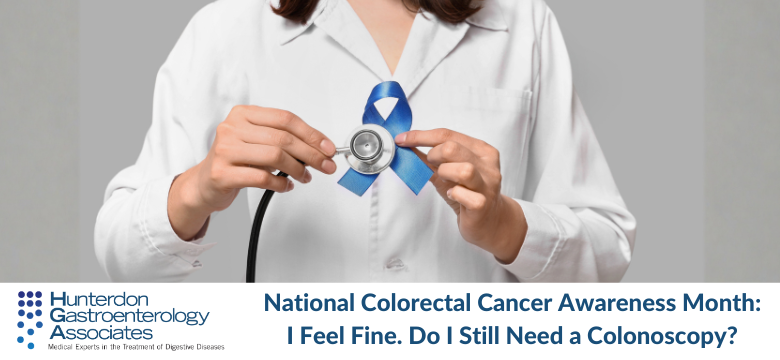
March is National Colorectal Cancer Awareness Month and it’s a good reminder to understand why colonoscopies matter even when you have zero symptoms, and what to expect when you schedule one.
Why Colon Cancer Doesn’t Always Announce Itself
Colorectal cancer is one of the most preventable cancers… but also one of the sneakiest. It’s the second leading cancer causing death in Americans for a reason. It’s also one of the most preventable.
In its early stages, it often causes no pain, no noticeable symptoms, and no red flags. That’s not meant to alarm you. It’s actually good news, because it means that if we catch it early, before symptoms appear, the outcomes are significantly better.
According to the American Cancer Society, when colorectal cancer is caught at an early, localized stage, the five-year survival rate is over 90%. When it’s caught after it has spread, that number drops considerably.
The window between “no symptoms” and “something serious” is exactly where a colonoscopy does its job.
What a Colonoscopy Actually Does
A colonoscopy isn’t just a cancer test; it’s also a cancer prevention tool.
During the procedure, your gastroenterologist examines the lining of your colon and rectum for polyps. Polyps are small growths that, on their own, are typically harmless. But over time, some polyps can slowly develop into cancer, a process that often takes years.
Here’s what makes colonoscopies unique: if polyps are found, they can usually be removed right then and there, during the same procedure. That means your doctor isn’t just detecting a potential problem, they’re stopping it before it has a chance to become one.
So When Should You Start Screening?
For most adults at average risk, the recommendation is to begin colorectal cancer screenings at age 45. If you have a personal or family history of colorectal cancer or certain polyps, your doctor may recommend starting earlier.
Many people put off scheduling because they’re waiting for a symptom to appear. But that’s a little like waiting until your car breaks down to get an oil change. The whole point of screening is to stay ahead of the problem.
If you’re 45 or older and haven’t had a colonoscopy yet, this month is a great time to change that.
“But I Really Don’t Want to Do the Prep”
Fair. The prep, which is the day-before bowel cleanse, has a reputation, and we won’t pretend otherwise.
But here’s some perspective: the prep has improved significantly over the years. Many options are lower in volume, easier to tolerate, and can be split between the evening before and the morning of your procedure. Your care team will walk you through exactly what to expect and help you choose the prep that works best for you.
The procedure itself? Most patients are comfortably sedated and don’t feel a thing. Many say the anticipation was worse than the actual experience.
One day of inconvenience to protect the next decade of your health is an excellent trade-off.
You Don’t Have to Wait for Something to Feel Wrong
It’s human nature to focus on what hurts. But the most powerful thing you can do for your digestive health, and your long-term wellbeing, is to show up before there’s a problem.
If you’re due for a colonoscopy, or if you’ve been putting it off, we’d love to help you take that next step. Our team at Hunterdon Gastroenterology Associates is here to make the process as comfortable and straightforward as possible.
Ready to schedule? Give us a call or request an appointment online. Your future self will thank you.